
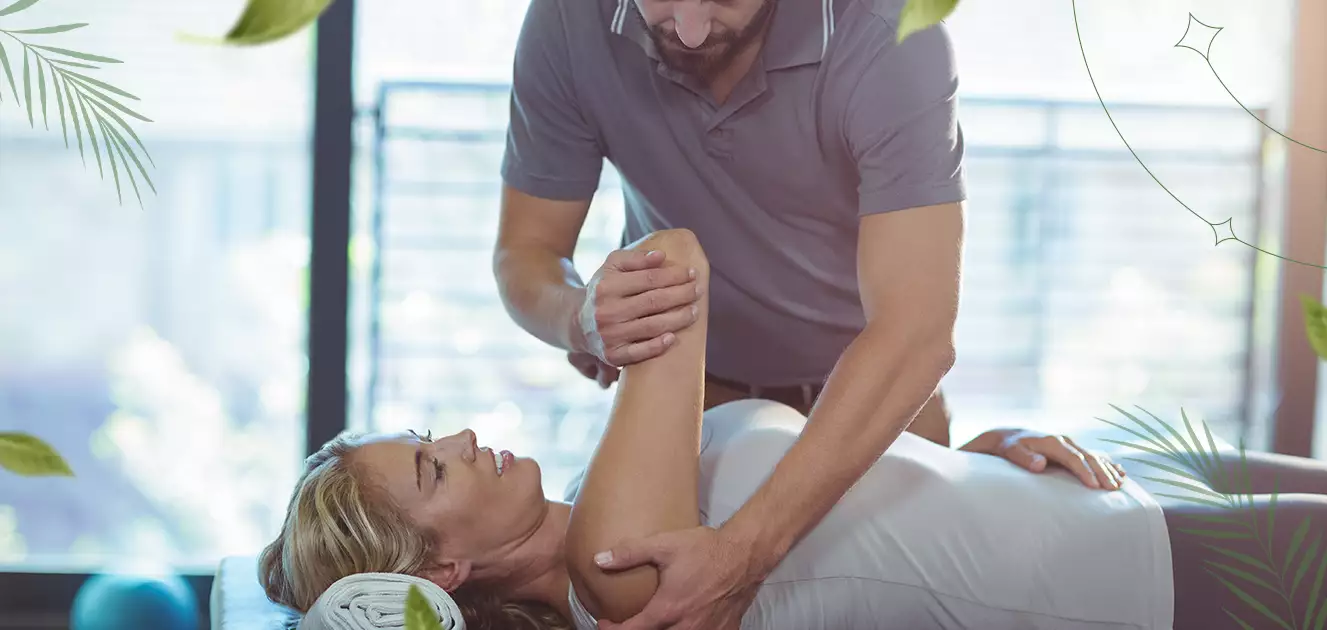
Sports massage for casual athletes is a soft tissue treatment that reduces muscle soreness, breaks down tension built up from irregular training, and helps prevent injury. You do not need to train daily to benefit from it. If you play sports or exercise on weekends, your body is under the same mechanical stress as any regular athlete.
You played football on Saturday. By Monday, your legs feel like concrete. You stretch, drink water, maybe sit in a hot shower for longer than usual, and still feel stiff heading into the week.
This is not just normal soreness. This is your body signalling that it is not recovering properly. Most casual athletes accept this discomfort as part of the deal. It is not sports massage that exists specifically to fix the problem, and it works whether you train twice a week or twice a month.
Why does your body take longer to recover
When you train only on weekends, your muscles, tendons, and connective tissue spend most of the week being relatively inactive. Then on Saturday morning, you are jumping, cycling hard, or lifting heavy. You’re asking tissue that has been subjected to more mechanical damage per session, slower cellular repair, and a build-up of those compounds week after week.
A 34-year-old recreational runner who trains only on weekends noticed that by the third month of her half-marathon prep, her right calf was permanently tight, even on rest days. She had been stretching regularly and assumed the tightness was just something she had to manage. This is exactly the kind of problem that builds quietly in casual athletes. There is no single dramatic injury. There is just accumulated tension that slowly changes how you move, and eventually that change causes a real problem.
What sports massage actually does inside the muscle
Sports massage is not the same as a relaxation massage with more pressure. It targets specific structures in the body with a specific purpose. When you exercise, your muscle fibres develop micro-tears. This is normal and necessary for strength development. The issue is that without proper intervention, the repair process can leave behind small patches of scar-like tissue called adhesions. These adhesions are denser than normal muscle tissue.
They restrict movement, reduce circulation in that area, and make the surrounding tissue more vulnerable to strain. Sports massage breaks down those adhesions manually. The therapist uses deep, directional pressure to work through the tissue layers, restoring the muscle’s ability to slide freely and receive proper blood flow. This speeds up the removal of waste products like lactic acid and brings in fresh, oxygenated blood that supports cellular repair. For casual athletes, this process is particularly important because adhesions form faster when training is intense and infrequent. You are giving your tissue a hard hit, then leaving it to repair without support for the rest of the week.
How to know if you actually need a sports massage
If you feel sore for more than 48 hours after a training session, that is a sign your recovery process is not completing properly. If the same area keeps getting tight every single week, rest is clearly not solving the problem. If you feel stiff at the start of every training session and it takes 20 minutes of warming up before you feel normal, your tissue is carrying tension from the previous session. These are all situations where sports massage is more appropriate than rest, and more effective than stretching alone.
A 41-year-old cyclist who trains every Sunday described feeling like he was always starting from 70%. He was never injured, just never fully recovered. After adding a fortnightly sports massage for cyclists at The Body Mechanic into his routine, he reported feeling closer to 95% at the start of each ride within six weeks. No other changes to training, nutrition, or sleep.
The right time to book a sports massage
Timing matters more than most people realise. The window for the most effective sports massage treatment after exercise is generally between 24 and 72 hours post-activity. This means if you train on Saturday, booking for Sunday evening or Monday is ideal.
During this window, inflammation has started to settle, but the tissue is still in an active repair phase. If you cannot get in during that window, mid-week sessions still have significant value. They help clear any residual tension before your next training session, which means you start Saturday fresh rather than carrying the load from the week before. The one time to avoid a deep sports massage is immediately before a hard training session or competition. Light pre-event massage to increase blood flow is fine. Deep tissue work within 12 hours of intense activity can temporarily reduce force output and coordination as the nervous system adjusts.
How often should a casual athlete get a sports massage?
Once a month is a reasonable starting point for someone training two to three times a week at moderate intensity. Once every two weeks makes more sense if you are training harder, playing competitive recreational sport, or dealing with a persistent area of tightness. The key is consistency over frequency. A deep tissue session once every three months is far less effective than a lighter maintenance session once every three to four weeks. Regular massage keeps tissue in good condition rather than waiting until something is already causing problems.
The practitioners at The Body Mechanic typically recommend starting with two or three sessions close together to address existing tension, then spacing out to a monthly maintenance schedule once the tissue is in better condition. This approach is more efficient and more cost-effective than sporadic treatment.
The areas that casual athletes consistently neglect
Most casual athletes know which part of their body feels tight. What surprises people is how often that area is not actually the source of the problem. Lower back pain in runners is frequently caused by tight hip flexors and a restricted thoracic spine, not a back problem. Knee discomfort in cyclists often traces back to an overloaded IT band or poor hip stability, not the knee itself. Shoulder pain in swimmers frequently originates from restricted movement in the mid-back, which forces the shoulder to compensate with every stroke.
A sports massage therapist does not just work where it hurts. They assess the surrounding structures and the movement patterns feeding the problem. This is why people often report feeling better in areas they were not even thinking about after a session.
Does sports massage reduce the risk of injury for weekend warriors
Muscle tissue that receives regular maintenance is more resilient. It handles unexpected loads better, returns to full function faster after hard sessions, and moves with better coordination because the nervous system is getting cleaner signals from the tissue. This translates directly to lower injury risk during activity.
For casual athletes, the injury prevention argument has extra weight because the cost of injury is high. A torn muscle or a tendon problem can mean four to ten weeks off activity, significant pain, and often a slow, frustrating return to sport. The time, money, and disruption involved in dealing with a serious soft tissue injury far exceed the cost of the sports massage sessions that might have prevented it.
Final thoughts
If your body is doing physical work, it needs physical recovery support. The amount you train does not change that. Casual athletes who push hard on weekends and then sit largely still for five days are often in more need of structured soft tissue care than people training gently every day. Sports massage is not a luxury or a reward for serious athletes. It is practical maintenance for anyone who wants to keep moving without pain, recover faster between sessions, and stay out of the physio’s office.
You do not need to train like a professional to treat your body like one. Starting with a single session to understand where your tension is sitting and how your tissue is responding is enough. Build from there based on how you feel and what your training looks like. The investment is small compared to the alternative.