
No one tells you about that part. Then everyone speaks about birth, no sleep, feeding schedule. What no one tells you when you’re pregnant, but when you have a baby, for weeks, sometimes months, your body will feel like it’s being used by someone else. Lower back aches. Feeding and carrying shoulders that are “locked”. Swollen legs that don’t seem to get better with elevation.Swollen legs that do not improve when feet are elevated. Surprises most new mums.
Then the weeks pass by, and you wait and wait for it to work itself out. You convince yourself that you are fine, everybody feels like this, and that you need more sleep. (Fairly true, though.) However, it is not a tension that will lift automatically. After 9 months of changes, labour or surgery, your body needs proper support to recover, and that’s not just time and hope. This is where the massage for recovery after the birth comes in. I want to explain how it really works in your body, when you can start using it, and the benefits it offers you and your family in terms of swelling, back pain, and the emotional aspects of being a new mom. I do not want to give you something that is a generic wellness article here. I’m answering your questions because I know you are typing them into Google at 2 am when the baby sleeps.
What Is Postnatal Massage?
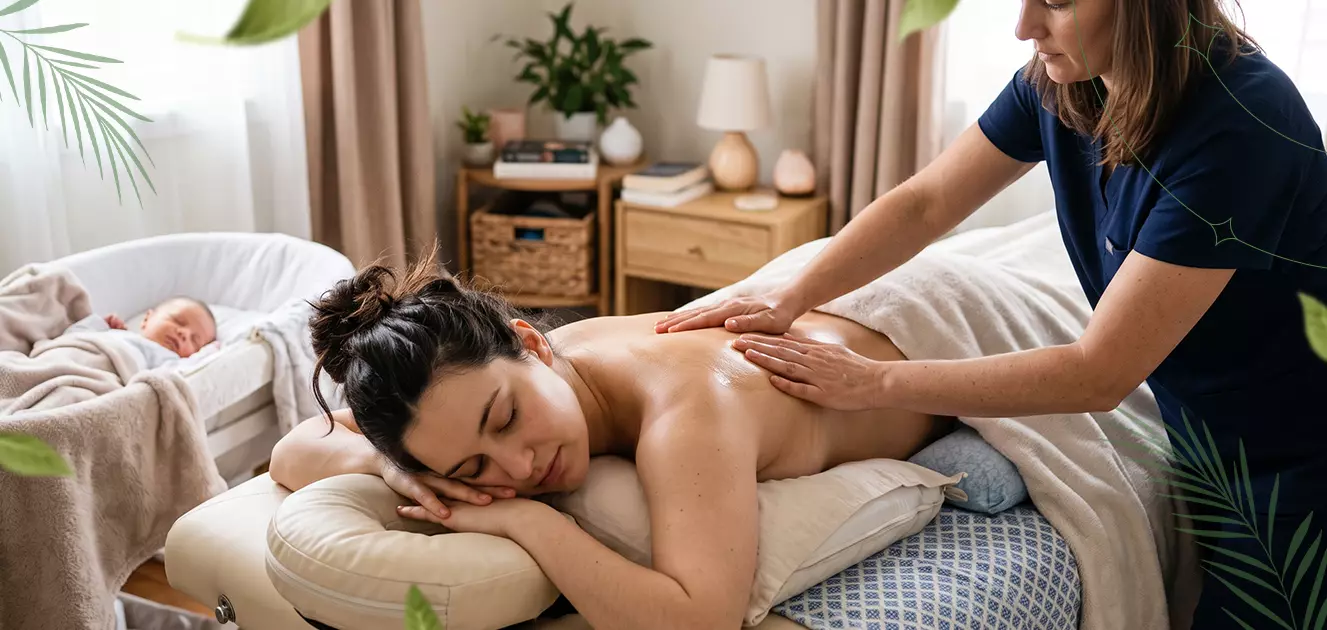
It’s a full-body massage, but specially designed for a postpartum body. So it’s not the same as booking a normal relaxation massage at your local spa. The pressure, where it’s applied, even what areas are worked on, all of that will be adjusted to what your body has just endured.
The majority of sessions are dedicated to the regions that are most affected during pregnancy and birth: the lower back, your hips, your shoulders and neck (oh god, I have to carry this baby around everywhere!) and later, your tummy as soon as you’re past the baby stage and ready to start talking about how you’re feeling. Many therapists also add in lymphatic drainage techniques, which are very useful for women who experience fluid retention in their first few weeks.
The reason for postnatal massage recovery is that it is not a general massage, but it is specially designed for the mother’s recovery.
Why It Helps More Than Just Sore Muscles
It brings anxiety down, not just tension. This is the part most new mums don’t expect. Massage triggers a drop in cortisol, the stress hormone that tends to stay elevated for weeks after birth thanks to broken sleep and the sheer weight of a new routine. At the same time, it boosts oxytocin, the same hormone involved in bonding with your baby. Put those two things together, and the effect isn’t just physical relaxation. It’s a genuine dip in that constant, low-level anxious hum a lot of women describe feeling after birth, even when nothing is technically wrong.
Helps reduce stress
Vaginal birth or C-section, your body went through something enormous. Muscles that stretched and strained for hours don’t just reset on their own. A lot of women carry tension in their back and hips for months simply because no one ever worked through it.
Helps reduce swelling
Fluid retention after birth is common, and it lingers, especially after a longer labour or a C-section. Gentle lymphatic-focused strokes help shift that fluid so the puffiness in your legs and ankles eases faster.
Better sleep quality
You’re not getting more hours. But the relaxation response from massage means the hours you do get actually count for something, instead of your body staying half-braced all night.
It undoes the damage from feeding position
Whether you’re breastfeeding or bottle feeding, hours of hunching over a baby wreck your shoulders and neck. Most mums don’t clock how much tension has built up there until someone works through it and the difference is immediate.
Is Postnatal Massage Safe?
Depends entirely on how you gave birth. Vaginal delivery with no complications: some therapists are comfortable starting light massage within the first couple of weeks, once bleeding has settled. Others prefer to wait until after your six to eight-week postnatal check, particularly if there were tears or stitches.
C-section: give it longer. The incision needs proper healing time, generally six weeks minimum, and even then a therapist will steer clear of direct pressure on the scar.
If you’re not sure, ask at your postnatal check. It’s the natural moment to raise it, and your GP or midwife will tell you honestly whether your body’s ready.
For most women, postnatal massage is safe once they feel ready and have received appropriate medical clearance where necessary. If you have experienced complications during pregnancy or childbirth, or if you have had a Caesarean section, always speak with your healthcare provider before booking a massage.
Your therapist will complete a full consultation to ensure your treatment is appropriate for your stage of recovery.
How Does Postnatal Massage Help Your Body Recover After Birth?
It improves circulation, brings down swelling, eases the muscle tension from feeding and carrying, helps balance your hormones, and supports the emotional adjustment that comes with new motherhood.
Your body goes through a huge amount in a short space of time. Your joints have loosened up because of the hormone relaxin, your posture’s changed to accommodate a bump for months, and now suddenly you’re hunched over feeding or lugging a car seat around all day. Massage helps by getting blood flowing to those tired, overworked muscles, which just speeds up how quickly they bounce back. Massage has been shown to lower cortisol (your stress hormone) while boosting oxytocin, which plays a role in bonding and milk production. That combination on its own can shift how you feel day to day, not just in your body but in your head as well.
When Can You Start Postnatal Massage After Birth?
If you’re having a straightforward vaginal birth, you may be able to begin gentle massage within the first week or so. When you have a C-section, most therapists and doctors want you to wait at least 4-6 weeks until your cut has healed.
Some therapists like to wait until after your GP check at six weeks for safety. If you had stitches or tears or lots of bleeding, then that should heal first, regardless. The recovery from a c-section is longer because you have a real surgery to recover from, not just birth. It is a rule of thumb that it takes between 4 weeks and 6 weeks, but some women are advised to wait as long as 6 weeks due to the wound healing. No matter which, always consult your GP or midwife before booking anything, particularly if delivery was complicated.
Is Postnatal Massage Safe After a C-Section?
Yes, once your incision’s properly healed. In the early stages, your therapist will avoid putting any pressure directly on the scar and will start with gentle strokes around the area instead. Later on, once things have settled, some light scar tissue work can actually help with flexibility and that tight, pulling feeling a lot of women describe around their scar. If you notice any redness, swelling, or signs of infection near the incision, hold off and speak to your doctor before booking anything. Your safety comes before relaxation, every time.
Benefits of Postnatal Massage
A lot is happening in your body during those first few months, and massage helps with more of it than people expect.
- Fluid retention is incredibly common after birth because of hormonal shifts and the pressure that’s been on your blood vessels for months, and massage supports lymphatic drainage, which helps clear that excess fluid.
- Sore muscles, a stiff lower back, tight shoulders from feeding- all of it responds well to targeted massage work.
- Circulation improves, and better blood flow means your tissues heal faster and your body clears waste more efficiently.
- Your abdomen gets some support too. Once you’re cleared for it, gentle abdominal massage can help with muscle tone and even support the healing of diastasis recti, the abdominal separation a lot of women deal with during pregnancy. The relaxation that comes from massage helps with sleep quality, which feels priceless when you’re running on newborn hours.
Can Postnatal Massage Help With Postpartum Anxiety and Mood?
The benefits get all the attention, but the emotional support matters just as much. Massage lowers cortisol and raises oxytocin, and that shift can genuinely help with the anxiety, low mood, and general overwhelm so many new mums go through in those first weeks. If you’re dealing with postnatal depression. But as part of your overall care, it’s a genuinely valuable piece of the puzzle. Sometimes just having an hour where someone’s looking after you, instead of the other way round, does more for your head than you’d expect.
Does Postnatal Massage Help With Diastasis Recti?
Diastasis recti is when your abdominal muscles separate during pregnancy, and it’s far more common than people realise. For a lot of women, it heals naturally with time, but gentle, targeted massage combined with the right movement can support and speed up that process, once your therapist has confirmed you’re ready for abdominal work. It won’t fix diastasis recti on its own, and if the separation’s significant, your GP or a women’s health physiotherapist should be involved too. But as a supporting therapy alongside proper guidance, it does have a real role to play.
How Many Postnatal Massage Sessions Do You Need?
It really depends on what you’re recovering from and how your body responds. Some women feel real benefit from just one session, especially for relaxation and stress relief. For more targeted recovery, like ongoing swelling or persistent tension, a short course of around 3 to 5 sessions tends to give better, longer-lasting results. Just listen to your body as you go. If you feel worse after a session, or anything feels off, mention it to your therapist straight away.
What Should You Expect During a Postnatal Massage Session?
Your first session usually starts with a conversation about your birth, any complications, how you’re feeling physically, and anything you’d like the therapist to focus on or steer clear of. From there, you can look forward to a full-body treatment that will focus heavily on your back, shoulders, hips and legs, and won’t get to your abdomen until you’re give n the all clear.
The position is adjusted, too. Your therapist will support your positioning so you can lie face down, or have you lie side-on, if this is not comfortable, particularly if you are breastfeeding. The very best postnatal massage therapist will always prioritize comfort over a set routine.
Where Can You Get a Postnatal Massage in Greenwich?
This is exactly the type of care we specialize in with Meridian Spa for Greenwich residents around the area. Our postnatal massage treatments are customised to your point in recovery, whether you’ve had a vaginal birth or a C-section, and always begin with a proper discussion of your birth before we begin. There is no set routine for recovering from a postnatal massage. It’s all about connecting with your body where it is.
FAQs
Can I get a massage a week after giving birth?
If you had a straightforward vaginal birth with no complications, gentle massage can often start within the first week. Check with your midwife or GP first, especially if you had tearing or stitches.
How long after a C-section can I have a massage?
Most guidance says wait at least 4 to 6 weeks until your incision is fully healed. Some women need longer depending on their own recovery.
Does postnatal massage help with back pain?
Yes, back pain is extremely common after birth because of changes in posture, feeding positions, and carrying your baby around all day, and massage is one of the most effective ways to ease it.
Is postnatal massage the same as a normal massage?
It uses adjusted techniques and positioning suited to a postpartum body, and often includes lymphatic drainage and gentle abdominal work once you’re ready for it.
Can massage help with postpartum swelling?
Yes, lymphatic drainage techniques used in postnatal massage are particularly effective for reducing fluid retention and swelling after birth.